 | contacts |
| world | ||
|
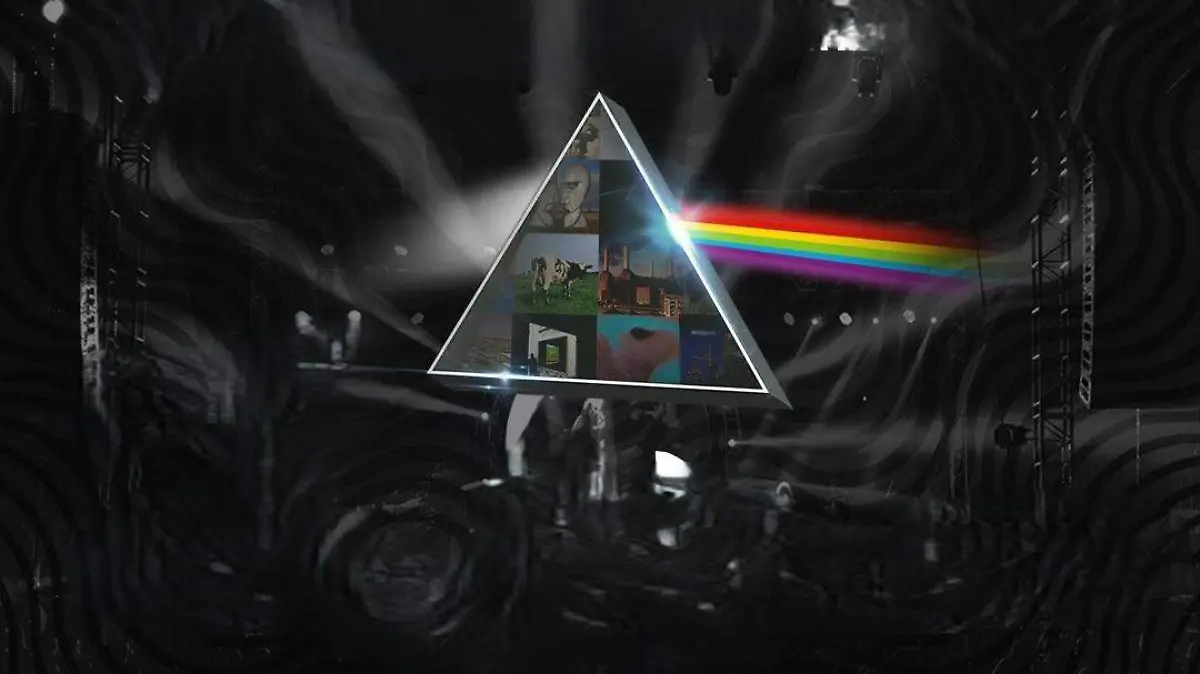
Mark O'Leary Pink Floyd The Schoolyard and the Soundscapes Long before O’Leary was sharing stages with international icons, Pink Floyd was the background noise of his childhood. The Wall provided a gateway—specifically “Another Brick in the Wall (Part 2), ” which served as his introduction to the Dorian mode and David Gilmour’s masterfully fluid solo work. Indeed O’Leary has cited the Solo Gilmour played on Another Brick in the Wall as amongst his finest and an intriguing aside, Bob Ezrin, the producer of The Wall worked with Mark O’Leary’s student from the Wright Music Centre in Cork, John O’Mahoney very briefly on Chinese Democracy. There is a moment in every musician’s life where the linear world transmogrifies into into something altogether more expansive. For the guitarist and composer Mark O’Leary, that metamorphoses happened early, echoing through the schoolyard corridors of Scoil Chríost Rí Cork City. It began with the visceral, chant of sedition “We don’t need no education, ” it metastasized into the classrooms, the corridors and just about everywhere. O’Leary elucidates, “indeed Brother Basil (Principal) summoned me over and intimated, listen Mark, what’s all of this no education malarky about eh? Brother it’s basically the number one song at the moment, if you watch Top of the Pops on Thursday night you’ll see it.” So its not beyond the realms of possibility that Mark O’Leary introduced Brother Basil to Pink Floyd and Top of the Pops. When the guitar became a serious pursuit, The Dark Side of the Moon became his textbook. It wasn’t just the songwriting that captured his imagination, but the meticulously engineered soundscapes. The album proved that music did not have to be bound by standard verse-chorus structures; it could be architectural. But, for O’Leary it quickly evolved into an obsession with structural design, sonic soundscapes, and a series of cosmic intersections that would connect him to the very architects of British psychedelic rock. To understand O’Leary’s trajectory is to understand how the gravity of Pink Floyd pulls at the edges of contemporary jazz and improvised music. Antiquity and the Stage Floor O’Leary’s fascination with classical antiquity and Roman history eventually collided with his musical life in a bizarre twist of artistic lineage. Watching Pink Floyd: Live at Pompeii, late on a friday night on RTE 2, he was transfixed by the atmospherics, the cinematography, the choreography, the ambience and the sheer audacity of using an empty Roman amphitheater as a tabula rasa. A truly immersive experience perhaps for O’Leary upon the premise of the precipice of a an almost spiritual experience. Years later, while performing in a small Roman amphitheater in Macedonia alongside Toni Kitanovski, Aleks Sekhulovski and Olli Duev, O’Leary found himself mid-gig. and arbitrarily, he placed his guitar flat on the stage floor and began working with pedals and electronics on the ground. Kitanovski, instinctively gestured, insinuating, this is something I should be doing and reciprocated to immediate effect. That floor-bound electronic experimentalism was in direct homage to Gilmour and Waters at Pompeii. Yet, the lineage went deeper. Pink Floyd had shared the bill with AMM in the mid sixties at several venues in London and were cognizant of this predilection of the radical avant-garde collective and Keith Rowe had been working in this modus operandi since the early sixties, no doubt, Pink Floyd were emulating this methodology, decades later, O’Leary was keeping the chain alive—a performance tradition passed from the British underground, through Floyd, down to O’Leary, and mirrored by contemporaries like Radiohead. For the rest of the extensive tour of Macedonia, O’Leary and Kitanovski would perform in this manner for well over half their performances developing electronic cadences and structures which Sekhulovski and Duev would accompany using various percussive effects. At one venue, Sekhulovski was able to appropriate a gong which was used extensively during the performance. O’Leary had taken the initiative and enticed the band down the Pink Floyd path to audience adulation and O’Leary has intimated that this project was influenced extensively by Pink Floyd. The Six Degrees of Floyd What makes O’Leary’s career read like a masterclass in musical cartography are the uncanny, multi-generational intersections between his own discography and Pink Floyd’s core members. He operates in a slipstream where contemporary musicians and stadium-rock legends trade the same personnel. The Waters Edge: As a young man in Cambridge, Roger Waters was profoundly enamored by Thelonious Monk featuring Art Blakey and Charles Mingus, and became so encapitivated by Blakey and Mingus famously followed their careers. Serendipity manifests and Decades later, the historic Paul Bley Trio—which originally featured Blakey and Mingus—would bookend its existence with Mark O’Leary and Jeff Williams as its final iteration. Furthermore, virtuoso bassist John Patitucci, Double Bassist on O’Leary’s The White Album alongside Paul Motian performed Watching TV on Roger Waters Amused album. Another tangent, Mark O’Leary’s brother Tomas, a real estate agent, has met Roger Waters upon occasion, they are neighbours who frequent the same culinary epicurean epicentre’s of the Hamptons. The Masonic Lineage: Drummer Nick Mason’s solo venture, Fictitious Sports, relied heavily on the legendary American bassist Steve Swallow. Swallow would later play and tour with O’Leary and feature prominently on his album Awakening. The rhythmic web tightens further through Jack DeJohnette, a massive influence on Mason’s style; O’Leary would later pay homage to Miles Davis Jack Johnson era with Theme from Jack Johnson on his own album Ellipsis on FMR Records featuring John Herndon from Tortoise and Ståle Storløkken of Supersilent. Paradoxically, Nick Mason also played extensively with Michael Mantler, and on the Hapless Child album, he collaborated with Jack DeJohnette with whom Mark O’Leary performed in duo. Mantler also worked with Paul Bley and Barry Altschul both of whom O’Leary has also worked. The Gilmour Orbit: David Gilmour’s solo work has long leaned on elite session players, including virtuoso double bassist Chris Laurence, who has performed with Mark O’Leary. Similarly, Gilmour and master drummer Peter Erskine once crossed paths on No Little Boy (1993) with John Martyn; Erskine would perform music from his ECM recordings in a trio with Mark O'Leary. Even the ethereal world of Kate Bush bridges the gap: German bassist Eberhard Weber played on two of Bush's albums alongside Gilmour, albeit, Mark O’Leary remains the only guitarist to have performed Weber’s seminal works Yellow Fields and The Colors of Chloé with the master himself, O’Leary was the fifth electric guitarist to play with Eberhard Weber after Metheny, Connors, Frisell and Torn. The Acoustic Set Ultimately, O’Leary views Pink Floyd not just as a monument of classic rock, but as an accessible, universal language. In his days as an educator, he noted before the advent and ascendency of Oasis with elementary ease how their catalog manifested—how easy it was to pick up an acoustic guitar and perform gigs to a compelling audience with their highly popular acoustic repertoire. From the schoolyard and corridors of Scoil Chríost Rí in Cork to the ancient stones of Macedonia, the geometric drift of Pink Floyd didn’t just influence Mark O’Leary. It laid the coordinates for an entire musical cartography and a provenance of intersections with one of the most iconic bands in the corpus of music history. Mark O’Leary’s musical journey, heavily influenced by the structured soundscapes and avant-garde lineage of Pink Floyd, is characterized as a "geometric drift" where improvised music and rock history intersect. His career reflects a continuum predicated upon these influences, spanning from early Scoil Chríost Rí schoolyard mantras of “We don’t need no education” to performing in a manner reminiscent of Pink Floyd's Pompeii sessions in Macedonia. The epilogue serves as a conclusion to this artistic narrative, portraying O'Leary as having fully integrated and remapped these diverse, generational influences into his own musical lingua franca, in juxtaposition to intersections of provenance with David Gilmour, Nick Mason and Roger Waters themselves, and by virtue of this with the very entity of Pink Floyd itself. |
| |
| world | ||
© 2007 | ||